Adam Weismann
Adam Weismann (b. 1975, Iowa City, Iowa) is an American artist who has lived in the UK for 25 years. His practice explores the notion of deep time through the materiality and material possibilities of clay.
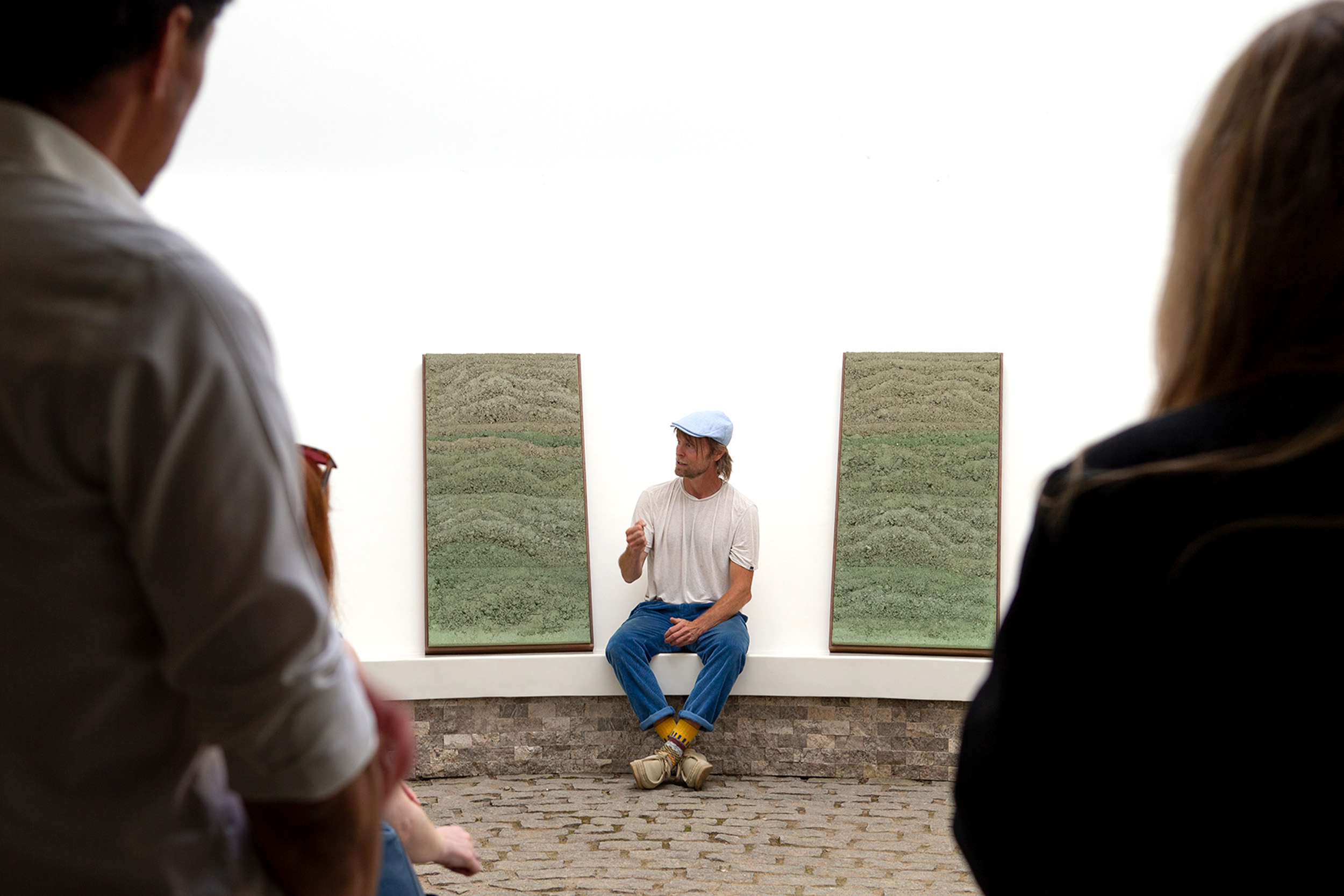
For more than three decades, Weismann has worked with clay in its broadest sense—as a building material, a medium for artistic expression and a vehicle for exploring humanity’s relationship with the natural world. Exploring ancient materials and processes in contemporary forms and ways, his work has developed through conservation, architecture, manufacturing and art, united by a fascination with the expressive possibilities of earth.
Alongside his artistic practice, Weismann co-founded Clayworks, through which he has helped redefine the role of clay in contemporary architecture. Through decades of research, experimentation and collaboration with architects, designers and craftspeople, he has demonstrated clay’s potential as a material for modern architecture, contributing to its specification on projects around the world. Rather than existing as a separate endeavour, this work forms part of the same ongoing investigation into the material possibilities of earth, with each discipline continually enriching the other.
Weismann’s methodology shares a philosophical affinity with the post-war Japanese movement Sōdeisha (走泥社). Translated as the “Crawling Through Mud Association”, Sōdeisha was founded in 1948 in opposition to the traditions of ceramic making, exploring clay in ways that allowed for a separation from functionality and convention. Similarly, Weismann examines the aesthetic and material properties of clay in ways that speak to the rhythms of nature, the beauty of imperfection and the processes of deep time. Like Sōdeisha, whose members rejected the toxicity of industrial glazes, his practice begins with a reverence for the natural world and a deep respect for raw materials that have metamorphosed over millennia.
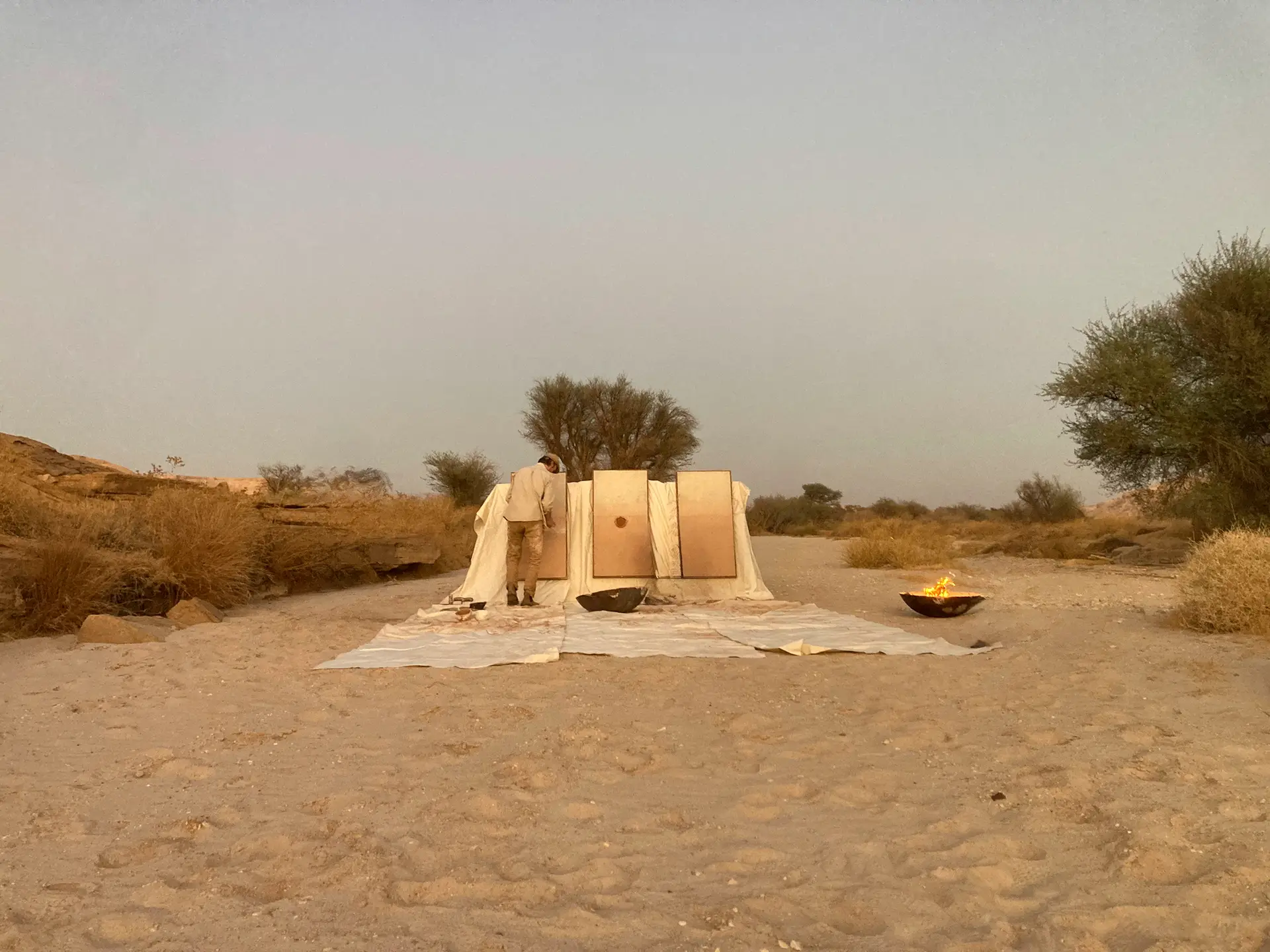
This connection to material is reflected in the inspiration Weismann draws from avian architecture. Just as a bird builds its nest using only the materials that surround it, leaving the imprint of its own body and heartbeat within the clay, his works seek to preserve the trace of process, touch and time. Rather than imposing form upon the material, Weismann works in collaboration with its natural behaviour, allowing the character of the earth itself to remain visible.
His most recent body of work represents the evolution of a practice that has quite literally seen Weismann crawl through mud. His knowledge of clay was shaped in part by many years spent conserving historic earth buildings, an experience that led to two books co-authored with his wife, Katy Bryce: Building with Cob and Clay and Lime Finishes. This long engagement with earth continues to underpin his work today, bringing together material knowledge, architectural thinking and artistic enquiry.
Weismann lives and works in the remote landscape of Cornwall, where his studio continues to develop new works and commissions for galleries, collectors and the built environment. His practice remains rooted in the belief that earth is not only one of humanity’s oldest materials, but one that carries the memory of deep time—revealing the enduring relationship between material, landscape and human experience.